An exhaustive strategic report and product showcase tailored for stationery wholesalers, retail buyers, corporate gifting directors, and private-label importers operating across the Greater Tokyo Metropolitan Area (Ginza, Shinjuku, Marunouchi, Nihonbashi).
Tokyo-Market Precision Stationery & Greeting Card Catalogue
Exclusively engineered to meet the high tactile standards, strict dimensional tolerances (JIS specs), and refined aesthetics demanded by Japanese stationery buyers.
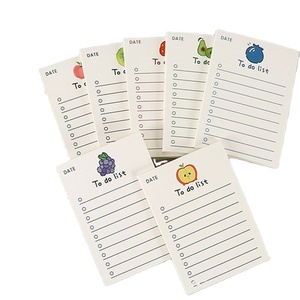
OEM Soft-Texture Greeting & Memo Pad Set (7 Pastel Designs)
Featuring 80gsm ultra-smooth write-through paper with low-tack repositionable acrylic adhesive. Designed for minimalist enclosure notes, desk reminders, and boutique gift wrap attachments popular in Shinjuku retail stores.
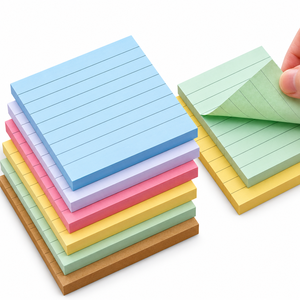
Customizable Lined Self-Adhesive Note & Greeting Flag Insert
Precision-printed lined notepad with zero ink-bleed formulation. Ideal for structured Japanese corporate correspondence (Aisatsu-jo), student planner indexing, and bookshop gift bundle enclosure cards.
Private Label Corporate Greeting Pad with Custom Logo Stamping
Engineered for Tokyo business gifting (Oseibo & Ochugen). Supports gold foil stamping, spot UV branding, and FSC-certified virgin pulp stock tailored for high-end Marunouchi corporate accounts.
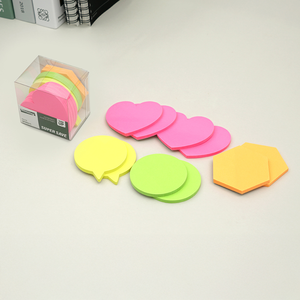
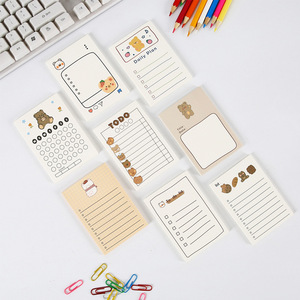
Die-Cut Shaped Novelty Greeting & Decorative Sticky Notes
Custom contour die-cutting with ±0.2mm accuracy. Perfect for Harajuku-style character stationeries, animal-shaped seasonal greeting inserts, and pop-up gift store merchandise.
Non-Adhesive Classic 50-Sheet Paper Desk Notepad & Card Insert
Single-side micro-offset printed on 100gsm high-opacity uncoated paper. Formatted to standard Japanese Hagaki dimensions for smooth fountain pen and gel pen legibility.
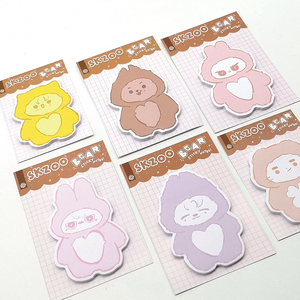
Promotional Creative Self-Adhesive Greeting Card Pad Set
Fully customizable cover packaging with multi-page internal printing options. A proven impulse-buy item for department store checkout counters across Yokohama and Tokyo station malls.
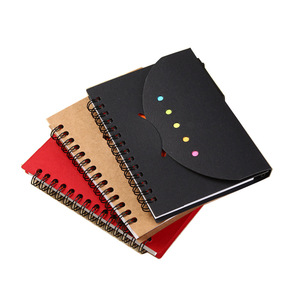
Eco-Friendly Folding Kraft Paper Greeting & Index Card Booklet
Constructed from 100% recycled unbleached kraft board with biodegradable paper flags. Meets Tokyo Municipality environmental procurement targets and ESG corporate standards.
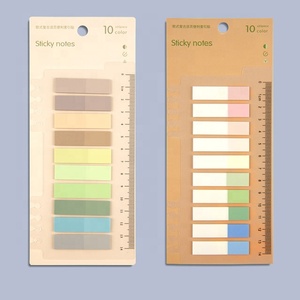
Waterproof PET Transparent Index & Greeting Film Card Pad
Ultra-clear synthetic PET film with ghost-free write-on surface. Used widely in architectural firms, luxury cosmetics packaging, and modern aesthetic Tokyo lifestyle stores.
Market Analysis: Supplying Paper Goods to Greater Tokyo
The Tokyo paper goods and greeting card ecosystem represents one of the most sophisticated B2B consumer markets globally. Characterized by strict reverence for paper grain, tactile texture, precise weight (measured in gsm or Japanese kg ream weight), and zero-defect packaging, entering or scaling within this market requires an exporter with established factory expertise and robust quality assurance (QA) frameworks.
Whether catering to high-end Ginza retail outlets, lifestyle chains in Shibuya, or corporate purchasing departments in Marunouchi, foreign brands and sourcing managers require manufacturing partners who understand the nuanced balance between Japanese aesthetic traditions (such as Omotenashi hospitality paper etiquette) and modern cost-efficient automated production.
99.85%
AQL 1.0 Pass Rate for Tokyo Customs
< 0.5
Delta-E Color Tolerance (DIC Standard)
15.2M
Monthly Unit Printing Capacity
100%
FSC Certified & Eco-Paper Sourcing
According to recent market benchmarks for Japanese stationery imports (HS Code 4909.00 for printed greeting cards and HS 4820.10 for paper note pads), demand for functional hybrid products—such as greeting cards featuring integrated sticky flags, message bookmarkers, and eco-kraft enclosures—has surged by 24% year-over-year in the Kanto region. Our facility has re-engineered manufacturing lines to serve this precise intersection of sentiment and utility.
Micro-Localized Application Scenarios in the Tokyo Area
Understanding where and how paper goods are consumed across Tokyo's distinct commercial districts.
1. Marunouchi & Nihonbashi: Corporate Formalities (Aisatsu-jo)
In Tokyo’s financial heart, business communication relies heavily on formal season-change letters (Shochu-mimai and Nendo-matsu corporate end-of-year greetings). Corporate clients demand heavy card stock (250–350gsm), crisp thermography, subtle gold or silver foil stamping, and matching blind-embossed envelopes.
2. Ginza & Omotesando: Luxury Gift Enclosures
High-end department stores and luxury fashion houses require mini gift-card enclosures with exceptional touch characteristics. Utilizing soft-texture matte cotton paper, vegetable soy inks, and spot-UV varnish, our products seamlessly integrate with luxury packaging aesthetics expected by Ginza shoppers.
3. Shibuya & Harajuku: Kawaii & Pop-Culture Retail
Youth and pop-culture hubs demand expressive die-cut shapes, vibrant pastel and neon Pantone palettes, and hybrid utility (such as greeting cards that unfold into desk list pads or feature reusable PET washi stickers). High turnover requires pre-barcoded retail-ready blister or hang-tab packaging.
4. Jimbocho & Kanda: Academic & Literary Bookstores
Tokyo’s historic bookstore district leans heavily into traditional Japanese motifs, woodland illustrations, eco-kraft papers, and literary bookmark-style greeting flags. Long-lasting non-yellowing adhesives and bleed-resistant papers are non-negotiable requirements for buyers in this district.
Key Industry Trends & Innovations Shaping Tokyo Sourcing
As a specialized OEM/ODM export factory serving Tokyo importers, staying ahead of market shifts is vital to offering our partners a distinct Information Gain and commercial edge over competitors.
1. Eco-Material Transition (FSC & Bamboo Hybrids)
Tokyo municipalities and major retailers (such as Loft, Hands, and Ito-ya) have accelerated strict environmental policies. We supply 100% FSC-certified virgin papers, post-consumer recycled kraft stock, and sustainable bamboo-fiber pulp options printed with low-VOC soy inks.
2. Standardized Japanese Sizing (Hagaki & Standard Envelopes)
Western postcard sizes often fail in Japanese automated postal sorting machines. Our factory utilizes precise die-cutting plates tuned to exact Japanese domestic post specs: standard Hagaki (100 × 148 mm), Western Envelope No. 3 (Choku 3), and standard square enclosure dimensions.
3. DIC & Pantone Matching Protocol
Unlike Western markets dominated solely by Pantone, Japanese brand managers rely on the DIC Color Guide standard. Our printing presses incorporate closed-loop spectrophotometer calibration to ensure perfect fidelity across both DIC and Pantone solid color systems.
Factory Infrastructure & Global Supply Chain Legacy
Over 17 Years of Dedicated OEM/ODM Manufacturing Excellence
Established as a premier paper crafts and desktop stationery manufacturer, our facility houses state-of-the-art German Heidelberg offset presses, automated Japanese high-speed die-cutters, and proprietary adhesive coating machinery.
Every product line shipped to the Tokyo market undergoes a rigorous 4-step QA inspection protocol:
- Raw Material Verification: Humidity-controlled paper storage preventing edge curling under Tokyo's seasonal climate shifts.
- Adhesive Tack Calibration: Testing removable acrylic glue to guarantee clean peel performance on delicate Japanese paper fibers without residue.
- Color Fidelity Audit: Automated spectrophotometer scans keeping Delta-E variance below 0.5.
- Retail Packaging Compliance: Pre-applied Japanese JAN barcodes, eco-labeling, and hanging display tabs formatted for standard pegboard fixtures.
Our export department handles direct consolidation to Tokyo Port (Aomi/Ohi Terminals) and Yokohama Port, as well as express air freight via Narita and Haneda airports for urgent Q4 retail replenishment.
Frequently Asked Questions (FAQ) for Tokyo B2B Procurement
Clear, technical answers to common export, customs, and OEM production inquiries.
Q1. What is the standard minimum order quantity (MOQ) for custom OEM greeting cards to Tokyo?
Our standard OEM MOQ starts at 1,000 to 3,000 units per design for customized die-cut shapes, foil stamping, or specialized card stock. For standard catalogue items or mixed-style store opening orders, we support lower trial thresholds starting at 500 units per SKU to accommodate boutique Japanese stationery test launches.
Q2. How do you ensure paper items do not warp during maritime transit to Tokyo Port?
Sea freight through humid tropical routes can cause paper moisture absorption and warping. We seal all finished cards, note pads, and display units in shrink-wrapped moisture barrier poly-bags with desiccant packs, packed inside heavy-duty double-wall corrugated export cartons (ECT-44 rated) on palletized wooden frames meeting ISPM-15 heat treatment standards.
Q3. What HS Codes and customs clearance documentation are provided for Japan importation?
We provide full export documentation under HS Code 4909.00 (Printed Greeting Cards & Postcards) and HS Code 4820.10 (Registers, Account Books, Memo Pads). Export paperwork includes Commercial Invoice, Packing List with Net/Gross Weights, Bill of Lading, Certificate of Origin (Form E/RCEP where applicable), and FSC Chain-of-Custody Declaration Documents.
Q4. Can you match specific Japanese DIC color codes for private-label brand programs?
Yes. Our pre-press prep software and ink-mixing workstations support both DIC (DIC Color Guide 1-6) and Pantone Matching Systems (PMS). Digital press proofs or physical sample drawdowns can be dispatched to your Tokyo office via DHL express prior to mass production approval.
Q5. What are your typical lead times from contract signing to warehouse delivery in Kanto?
Digital proofing takes 2-3 business days. Physical sample creation requires 5-7 days. Upon sample sign-off, mass production takes 15-20 days. Fast sea shipping to Tokyo/Yokohama port takes 4-7 transit days, resulting in a seamless door-to-door timeline of approximately 25-30 days for OEM production runs.
Partner with a Trusted Greeting Cards Exporter Today
Elevate your Tokyo retail collection or corporate gifting program with high-precision paper manufacturing, competitive factory-direct pricing, and flawless international compliance.